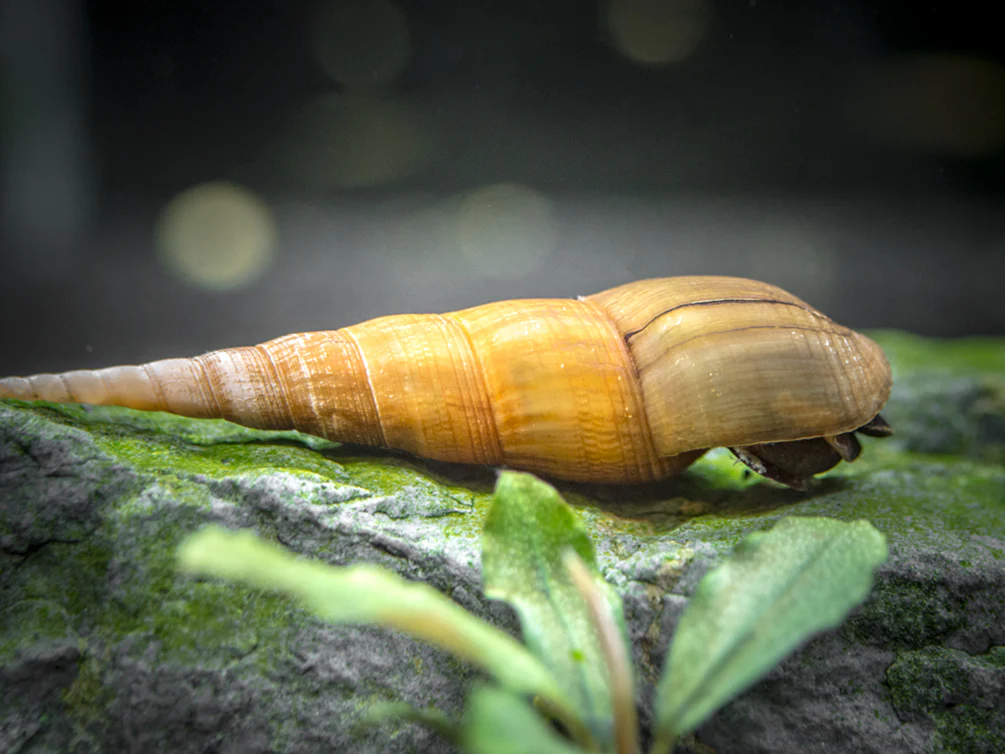
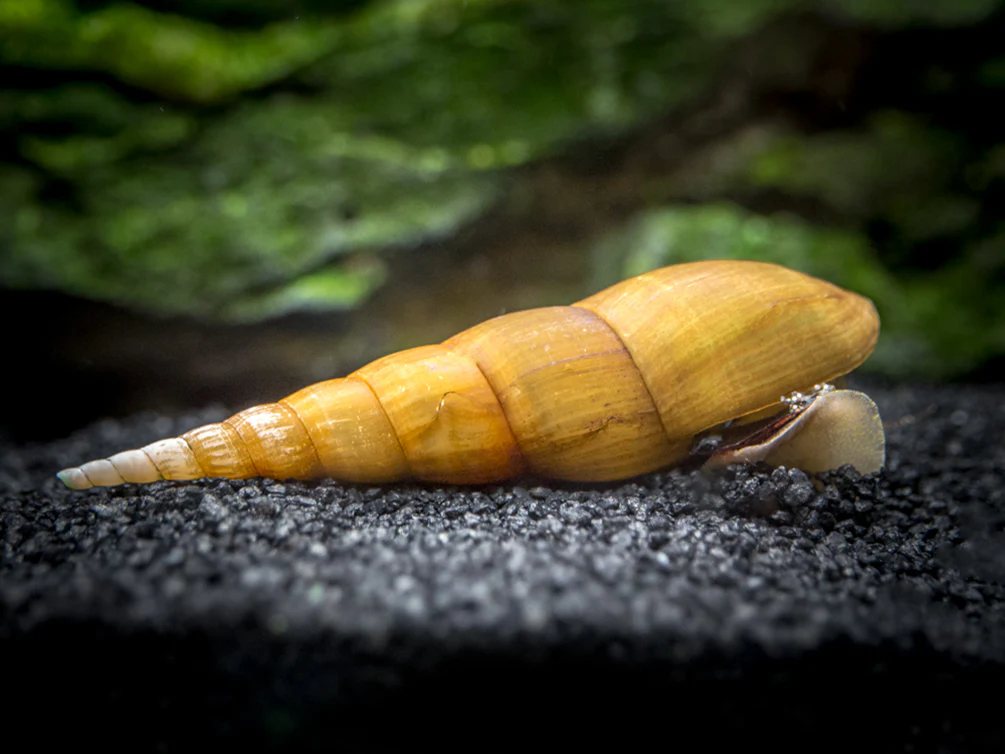
Japanese Trapdoor Snail (Sinotaia quadrata), BREDBY: Aquatic Arts
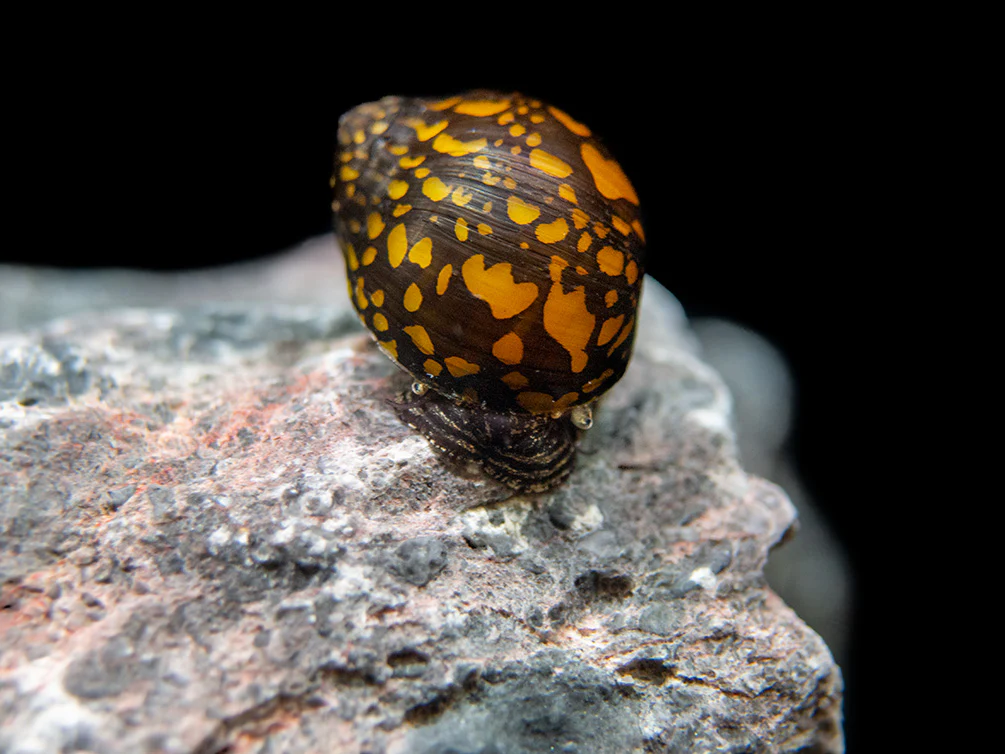
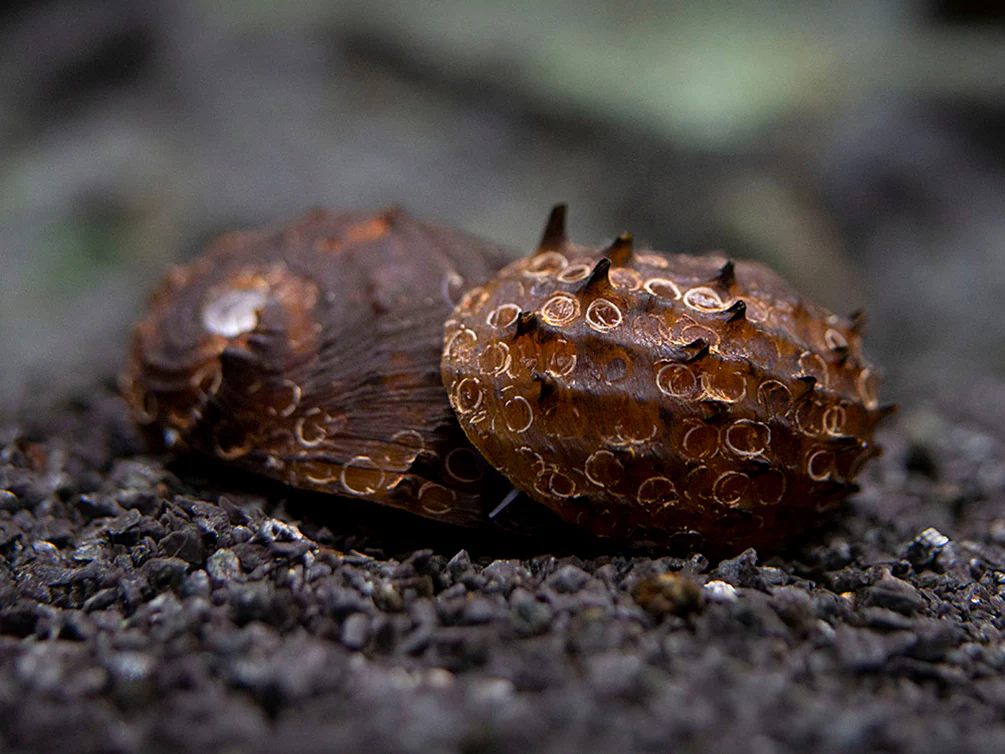
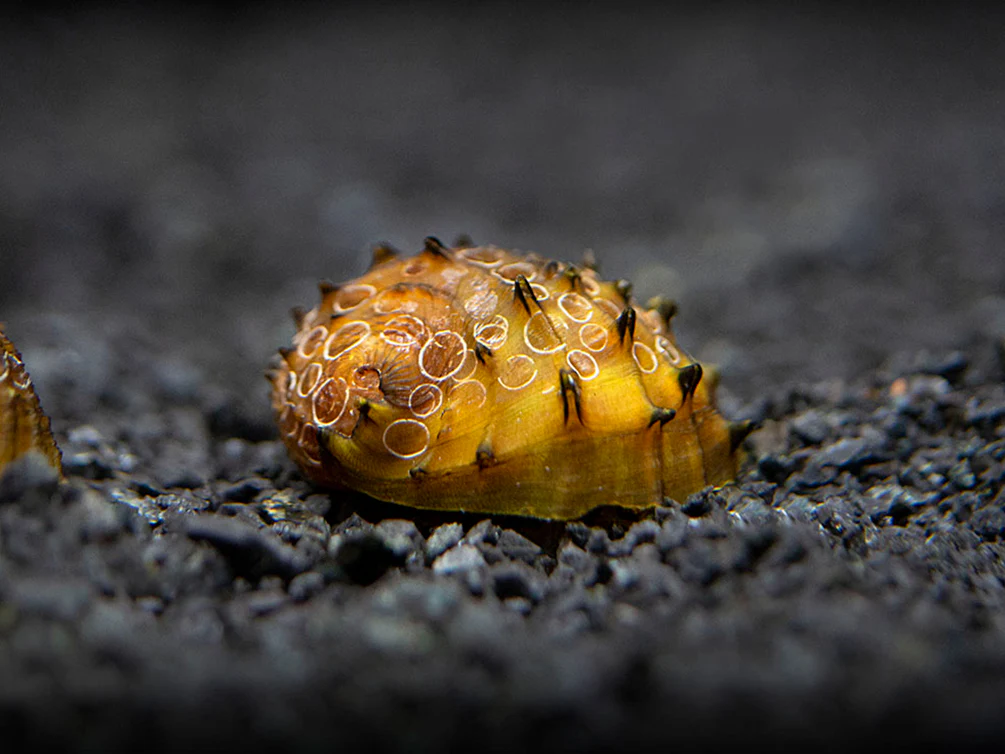
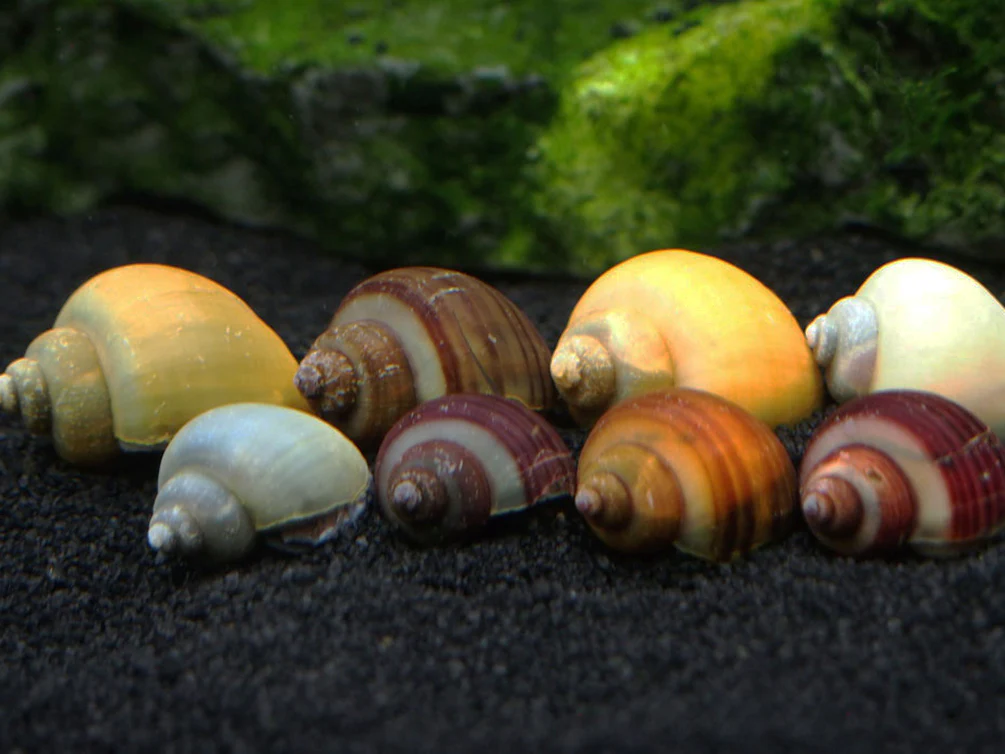
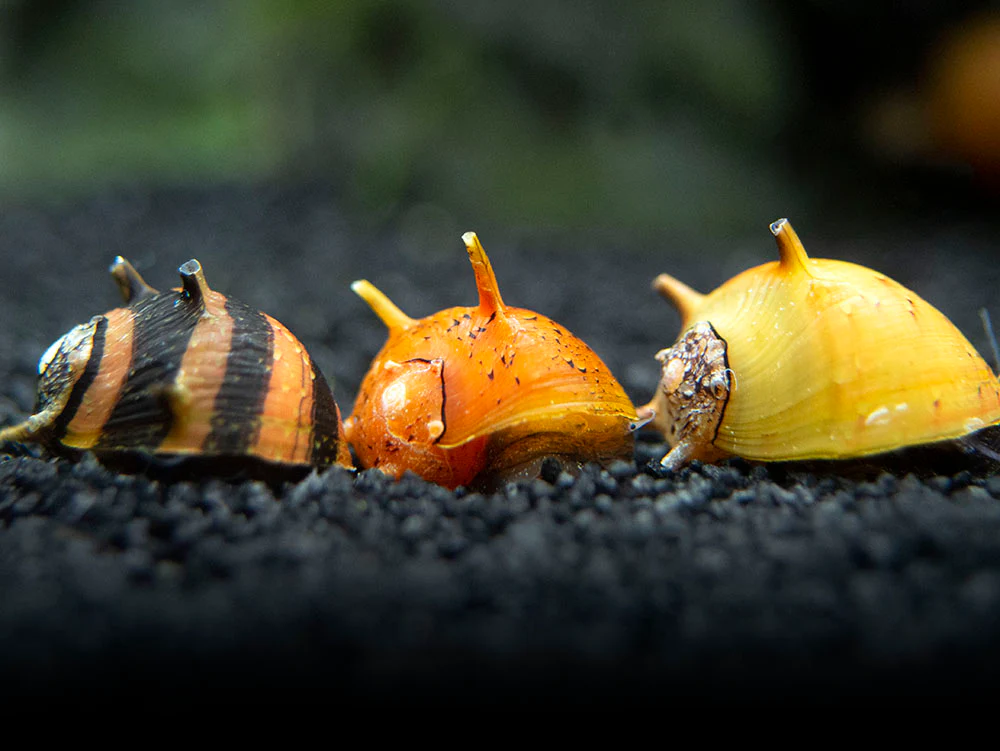
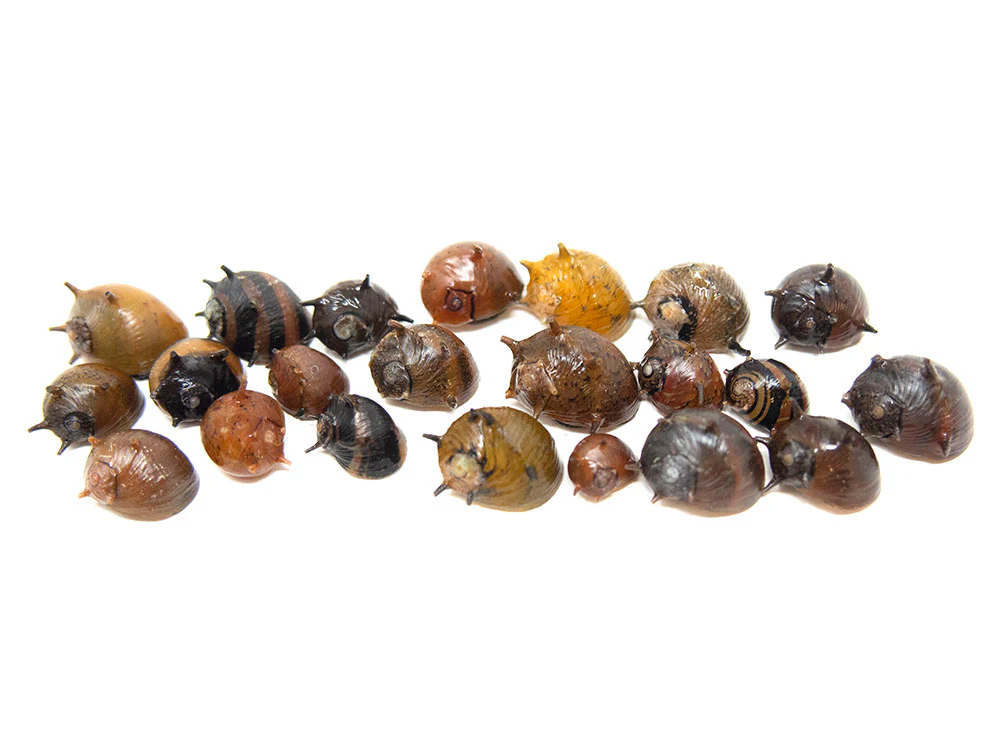
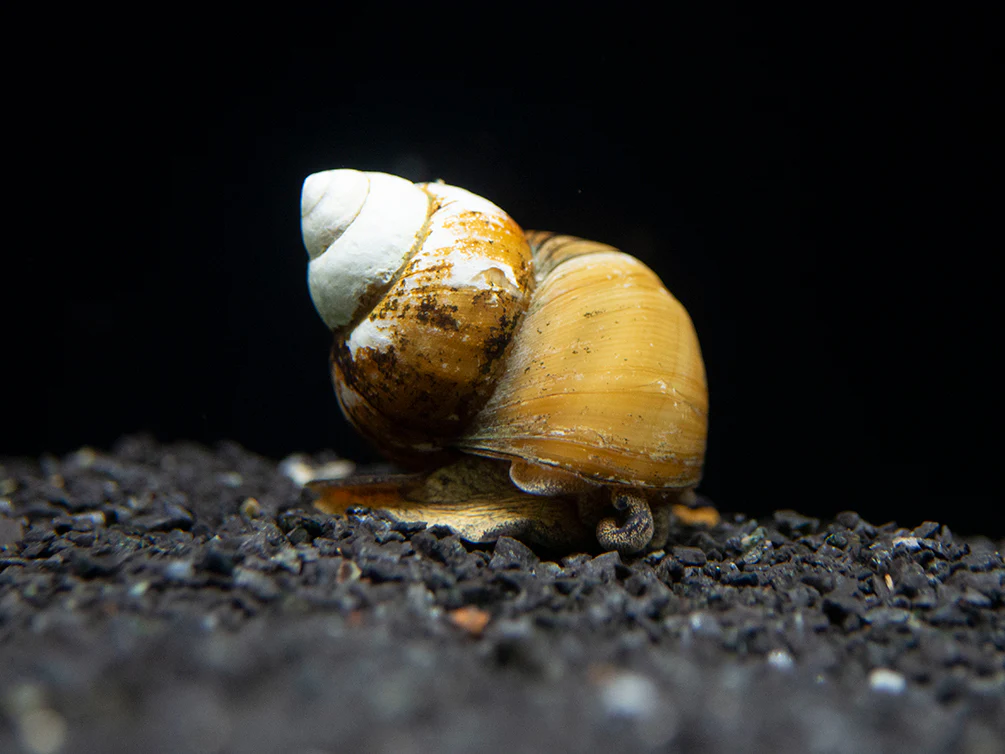
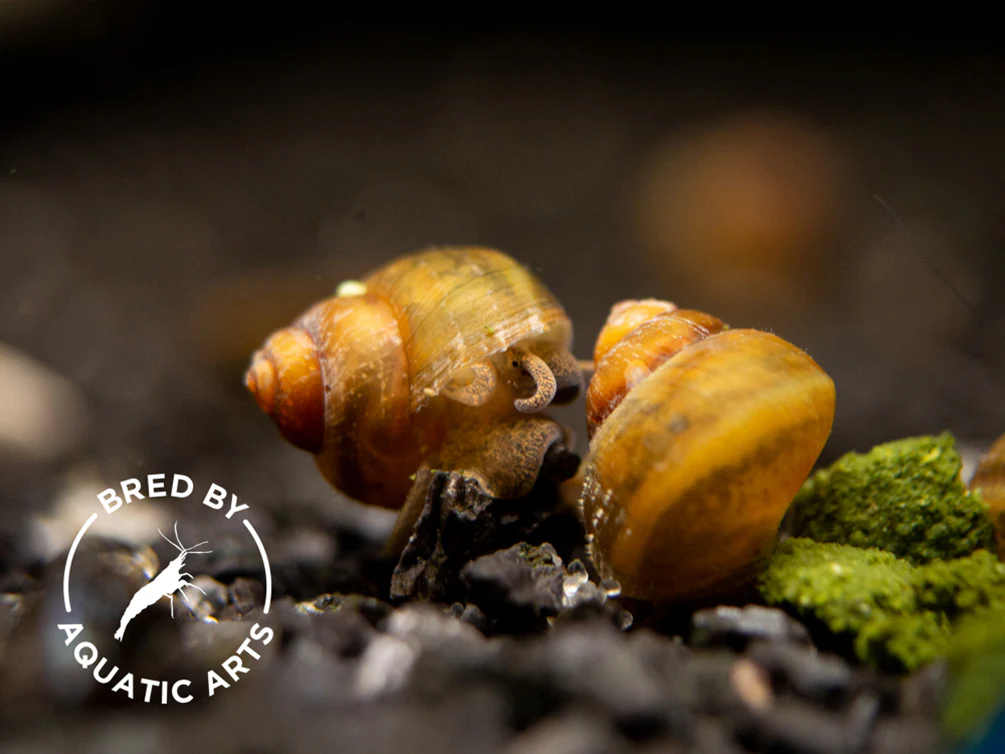
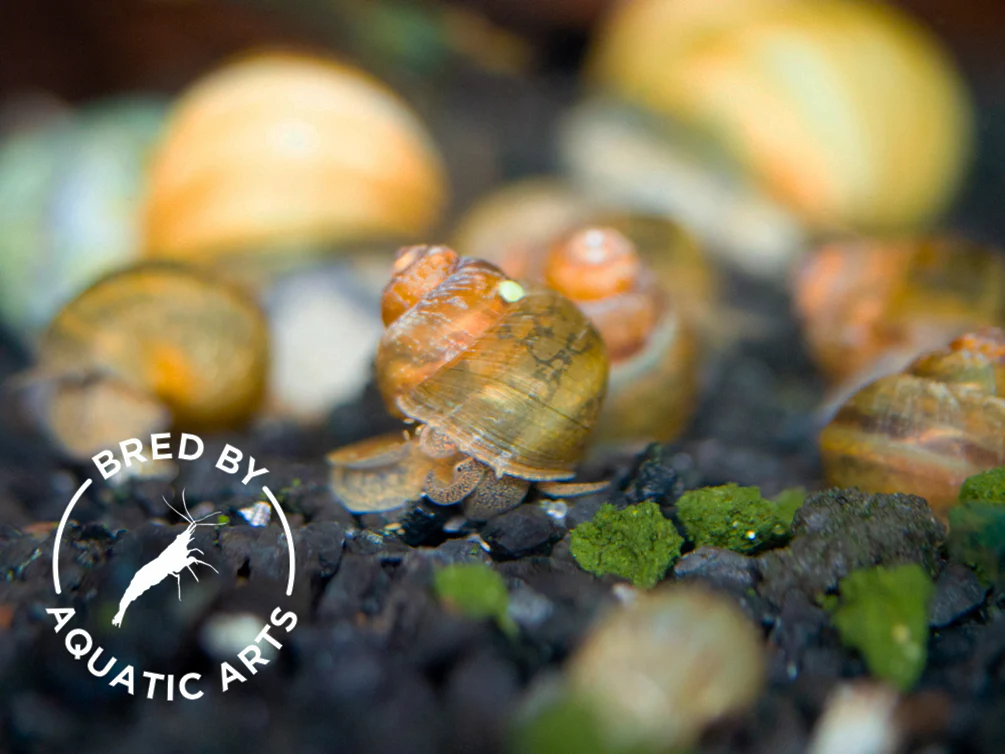
These large freshwater snails are quite unusual-looking yet very attractive, varying in coloration and patterns. We are proud to offer specimens bred in house at Aquatic Arts!
We offer 2 variants of Japanese Trapdoor Snails (please specify your preference by selecting a pack at the top of this page):
- Adult Japanese Trapdoor Snails (1/2 up to 1 inch)
- Juvenile Japanese Trapdoor Snails (1/8 up to 1/4 inch)
RECOMMENDED TANK PARAMETERS:
- pH level range: 6.5 - 8.0
- Temperature range: 68° - 85° F (20° - 29° C)
- Water type: Soft to medium hard
- Recommended Aquatic Arts tank mates: Other types of snails (Nerite snails, Mystery Snails, Sulawesi Snails, etc.), dwarf shrimp (such as Blue Velvet shrimp, Sakura Red Cherry Shrimp, Bee Shrimp, etc.). They can also be kept with small to medium-sized, non-aggressive fish.
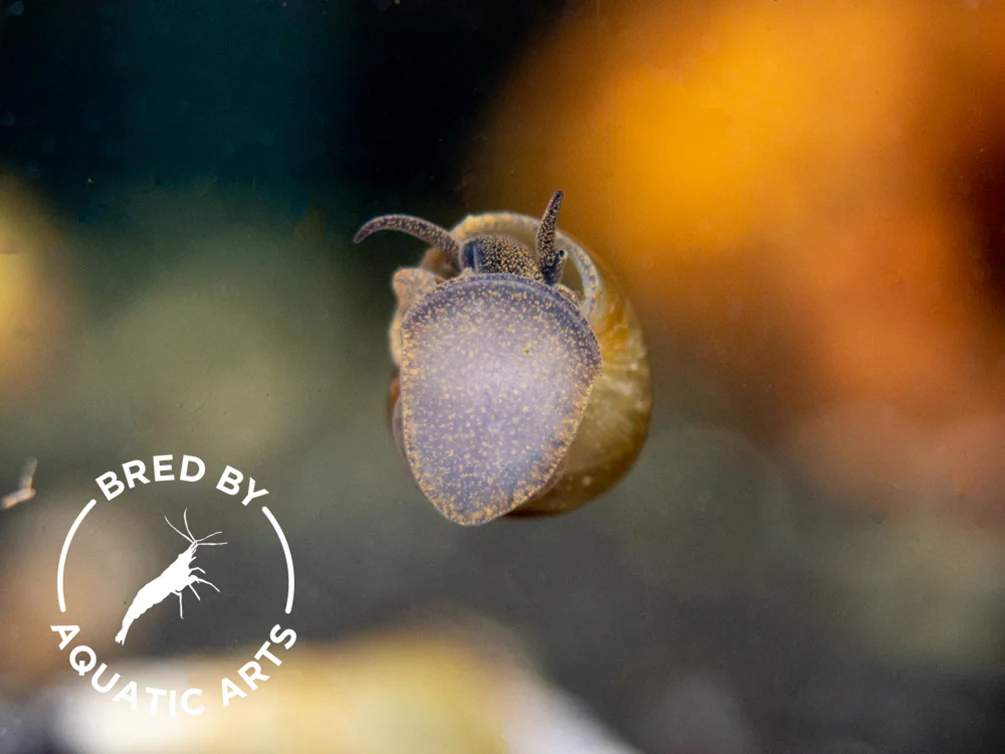
- Additional notes: With trapdoor snails, it's a good idea to make sure the water line in your aquarium isn't too high, as these snails tend to climb up to the water line to breathe air. Other than algae and biofilm, they also eat fish or invertebrate pellets and blanched vegetables such as zucchini, kale, spinach, or cucumber. Snails are very sensitive to copper, so watch out for copper if you use tap water in your tank.
Product Information
Product Information
Shipping & Returns
Shipping & Returns
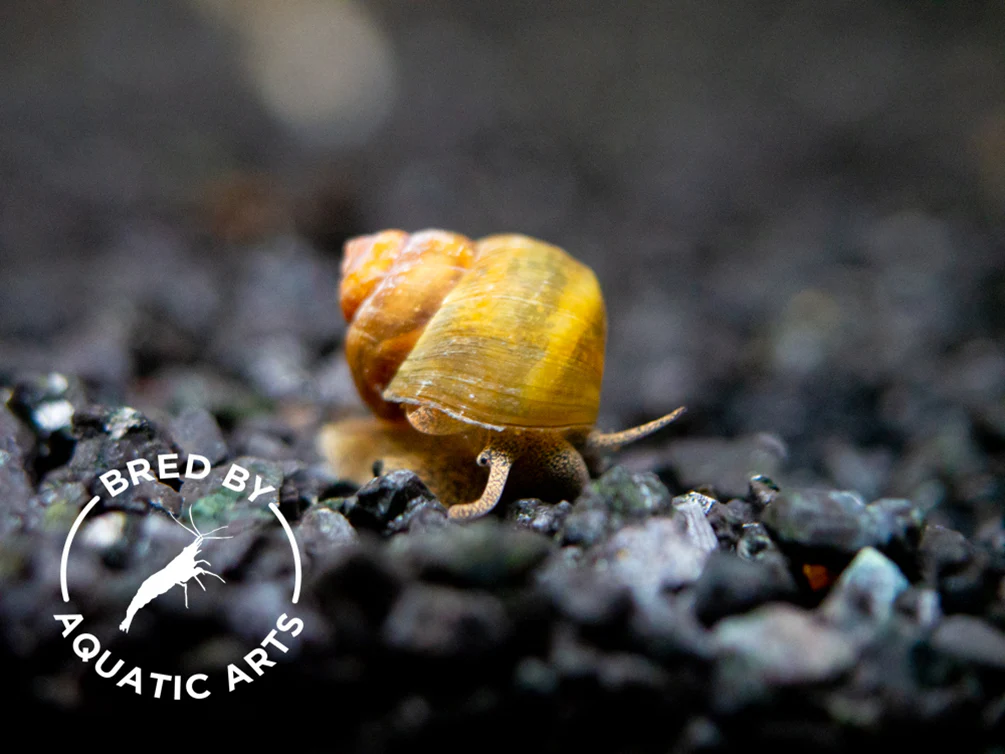

Japanese Trapdoor Snail (Sinotaia quadrata), BREDBY: Aquatic Arts
Japanese Trapdoor Snail (Sinotaia quadrata), BREDBY: Aquatic Arts
These large freshwater snails are quite unusual-looking yet very attractive, varying in coloration and patterns. We are proud to offer specimens bred in house at Aquatic Arts!
We offer 2 variants of Japanese Trapdoor Snails (please specify your preference by selecting a pack at the top of this page):
- Adult Japanese Trapdoor Snails (1/2 up to 1 inch)
- Juvenile Japanese Trapdoor Snails (1/8 up to 1/4 inch)
RECOMMENDED TANK PARAMETERS:
- pH level range: 6.5 - 8.0
- Temperature range: 68° - 85° F (20° - 29° C)
- Water type: Soft to medium hard
- Recommended Aquatic Arts tank mates: Other types of snails (Nerite snails, Mystery Snails, Sulawesi Snails, etc.), dwarf shrimp (such as Blue Velvet shrimp, Sakura Red Cherry Shrimp, Bee Shrimp, etc.). They can also be kept with small to medium-sized, non-aggressive fish.
- Additional notes: With trapdoor snails, it's a good idea to make sure the water line in your aquarium isn't too high, as these snails tend to climb up to the water line to breathe air. Other than algae and biofilm, they also eat fish or invertebrate pellets and blanched vegetables such as zucchini, kale, spinach, or cucumber. Snails are very sensitive to copper, so watch out for copper if you use tap water in your tank.
Original: $3.99
-65%$3.99
$1.40Product Information
Product Information
Shipping & Returns
Shipping & Returns
Description
These large freshwater snails are quite unusual-looking yet very attractive, varying in coloration and patterns. We are proud to offer specimens bred in house at Aquatic Arts!
We offer 2 variants of Japanese Trapdoor Snails (please specify your preference by selecting a pack at the top of this page):
- Adult Japanese Trapdoor Snails (1/2 up to 1 inch)
- Juvenile Japanese Trapdoor Snails (1/8 up to 1/4 inch)
RECOMMENDED TANK PARAMETERS:
- pH level range: 6.5 - 8.0
- Temperature range: 68° - 85° F (20° - 29° C)
- Water type: Soft to medium hard
- Recommended Aquatic Arts tank mates: Other types of snails (Nerite snails, Mystery Snails, Sulawesi Snails, etc.), dwarf shrimp (such as Blue Velvet shrimp, Sakura Red Cherry Shrimp, Bee Shrimp, etc.). They can also be kept with small to medium-sized, non-aggressive fish.
- Additional notes: With trapdoor snails, it's a good idea to make sure the water line in your aquarium isn't too high, as these snails tend to climb up to the water line to breathe air. Other than algae and biofilm, they also eat fish or invertebrate pellets and blanched vegetables such as zucchini, kale, spinach, or cucumber. Snails are very sensitive to copper, so watch out for copper if you use tap water in your tank.